Health awareness · Kenya

Slow Potassium Tablets in Kenya

K SR — Potassium Chloride Prolonged-Release Tablets 600 mg

Prolonged-release potassium chloride, 600 mg (≈8 mmol K⁺) per tablet, for the management of potassium depletion.

Learn about low potassium →
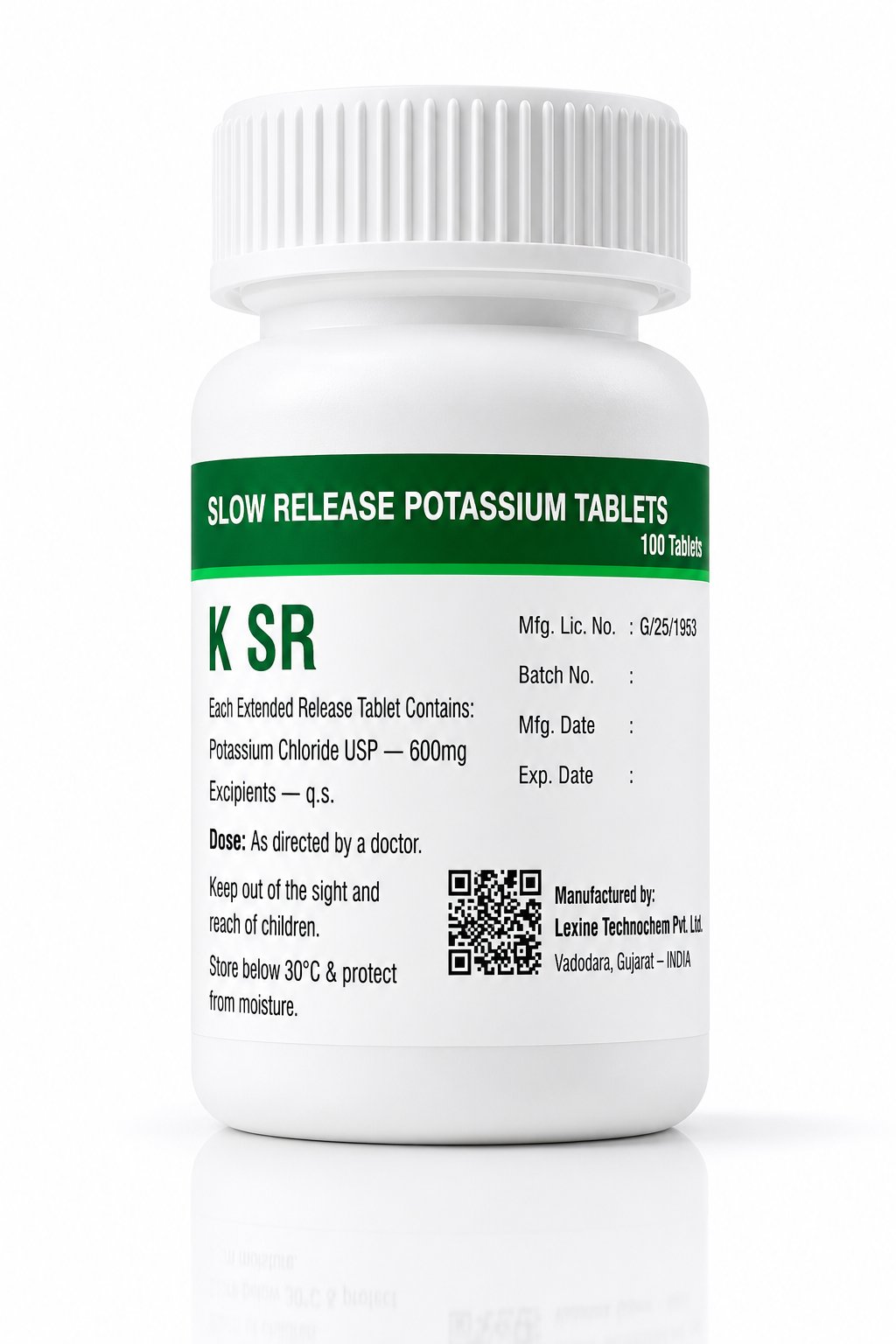
K SR Slow Release Potassium Tablets bottle — potassium chloride USP 600mg, 100 tablets
Two ways in
For healthcare professionals

Prolonged-release potassium chloride

K SR is a film-coated, prolonged-release tablet delivering 600 mg potassium chloride USP (≈8 mmol K⁺) per tablet, for use in the treatment and prevention of potassium deficiency.

  • Released gradually to help avoid the high local gut concentration associated with rapid-release potassium.
  • Manufactured under established pharmaceutical quality standards.
For patients & caregivers

Only use if it has been prescribed for you

Potassium is a prescription medicine, not a daily supplement. Never self-medicate — a clinician confirms whether you need it and sets the dose.

  • Swallow each tablet whole with a full glass of water, with or after food.
  • Sit or stand upright when taking it; do not take it at bedtime.
  • Do not chew, crush or suck the tablet. Store below 30 °C, away from moisture.

If you think you may have low potassium, speak to a doctor or pharmacist for a proper assessment.

Understanding the condition

Low blood potassium (hypokalaemia)

Hypokalaemia is a condition where the level of potassium in your blood is too low — below 3.5 mmol/L (the normal range is about 3.5–5.0 mmol/L). Potassium is essential for nerve signals, muscle contraction and a steady heartbeat, so a deficiency can affect how the muscles, gut and heart work.

~20%
of hospitalised patients are found to have low potassium at some point during their stay.
Source: Kardalas et al., Endocr Connect 2018
Leading
trigger is potassium-depleting (“water”) tablets; a large share of diuretic users develop low potassium.
Source: Kardalas et al., 2018; Medscape 2023
~2.5%
of community-dwelling adults aged 55+ show low potassium — about twice as common in women.
Source: Rotterdam Study (Liamis et al.)
What it can look like
Muscle weakness
Cramps
Fatigue
Palpitations
Constipation

These could be some of the possible presentations of low potassium and of several other conditions. Only a blood test and a clinician can confirm the cause.

Who is more at risk

Common situations linked to potassium loss

On long-term water tablets (diuretics) Prolonged vomiting or diarrhoea Long-term corticosteroid use Certain kidney conditions Some hormonal disorders Poor dietary intake / malnutrition
General mechanism

How prolonged-release works

This is general health education on the formulation principle — not a measured claim about any individual's results.

  1. Rapid release delivers the full dose quickly. That can produce a sharp peak and a high concentration of potassium against a small area of the gut lining.
  2. Prolonged release spreads delivery over several hours, so potassium is released gradually rather than all at once.
  3. The aim is steadier levels through the day and a lower local concentration in the gut — the idea behind “Steady Potassium, Sustained Health.”
Illustrative — release over time Plasma level Time after dose
Rapid release — quick peak
K SR prolonged release — steady
The essentials

K SR at a glance

Active substance
Potassium Chloride USP 600 mg per prolonged-release tablet
Form
White, round, biconvex, film-coated tablet
Pack
100 tablets in a plastic jar with desiccant
Storage
Store below 30 °C, protect from moisture, keep out of reach of children
Dosage: Always follow your prescriber's instructions. Your doctor or pharmacist will set the dose that is right for you and arrange any blood-potassium monitoring needed.
Common questions

Frequently asked

What is hypokalaemia (low blood potassium)?
Hypokalaemia is a condition where the level of potassium in your blood is too low — below 3.5 mmol/L. Because potassium helps run nerves, muscles and the heartbeat, low levels can cause weakness, cramps, tiredness and, in some cases, an irregular heartbeat. A blood test confirms it and a clinician decides whether treatment is needed.
What is K SR (Slow Potassium)?
K SR is a prolonged-release tablet containing 600 mg of potassium chloride USP (about 8 mmol of potassium) per tablet. It is used, on prescription, in the treatment and prevention of potassium deficiency when a clinician judges that supplementation is needed.
How are prolonged-release potassium tablets taken?
General guidance for solid oral potassium is to swallow each tablet whole with a full glass of water, with or after food, while sitting or standing upright, and not at bedtime. The tablet should not be chewed, crushed or sucked. Always follow the exact instructions given by your prescriber.
Who should not take potassium chloride?
Potassium chloride is not suitable for everyone. It is generally avoided in people with high blood potassium (hyperkalaemia), severe kidney impairment, untreated Addison's disease, or conditions that slow the passage of a tablet through the gut, and in people taking potassium-sparing diuretics such as spironolactone, amiloride or triamterene. A clinician will review your history and other medicines before prescribing.
Is K SR available in Kenya?
Yes — K SR is available in Kenya. Speak to your doctor about whether it's right for you. You're also welcome to contact us for the facts about hypokalaemia (low potassium), but K SR can only be started on a doctor's prescription.
Medical disclaimer

This page is for general health awareness only and is not medical advice. K SR (potassium chloride) is a prescription medicine. Do not start, stop or change any medicine without a diagnosis and prescription from a qualified healthcare professional. Taking potassium when you do not need it can be dangerous. If symptoms persist, seek medical advice.

Get in touch

Enquire about availability

This opens WhatsApp with your message ready to send. No data is stored on this site.